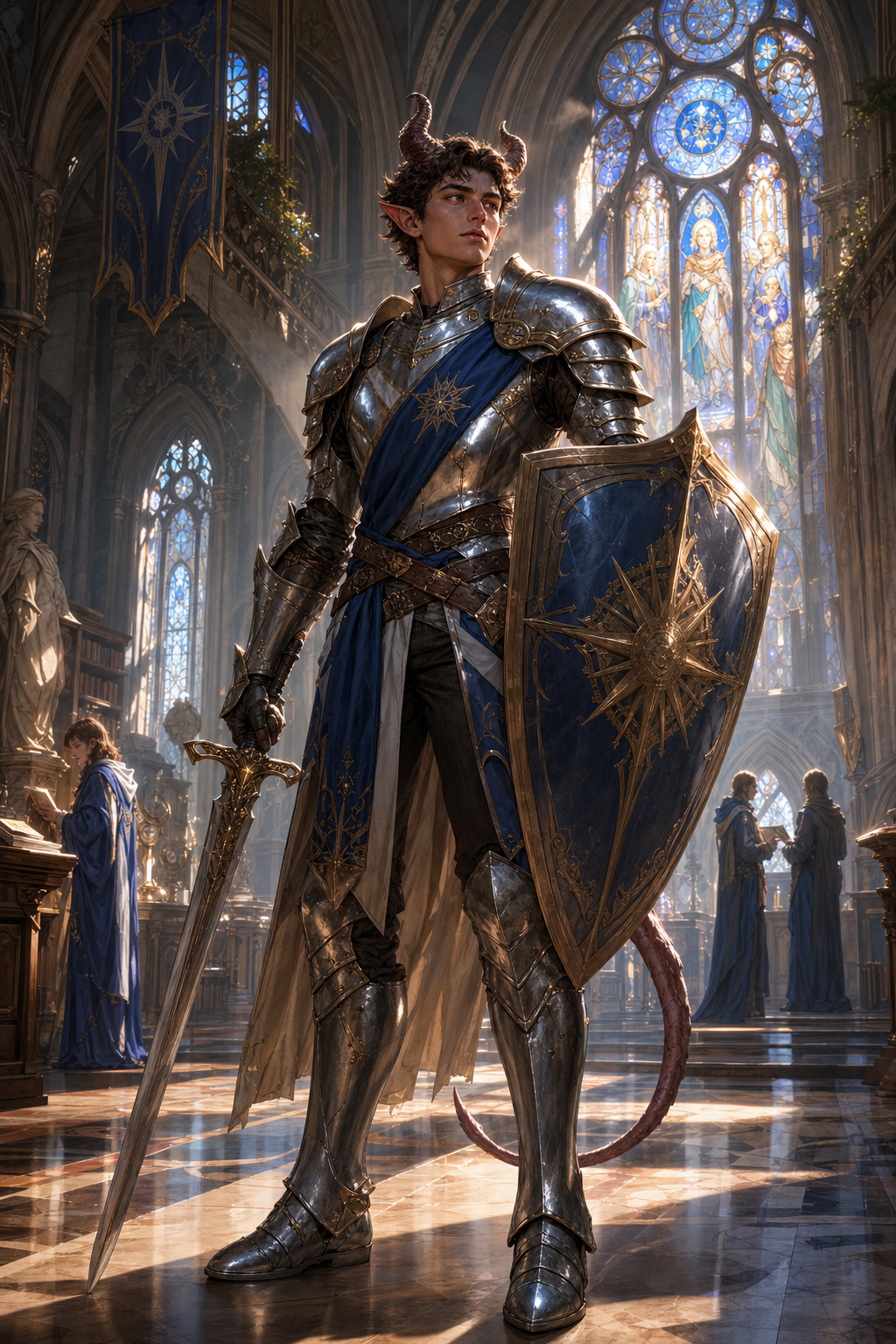
Paladin
Paladin
Paladins are oath-bound champions. They may serve gods, crowns, temples, knightly orders, civic ideals, ancestral duties, or personal vows so powerful that breaking them would break the self.
Paladins
Paladins are oath-bound champions. They may serve gods, crowns, temples, knightly orders, civic ideals, ancestral duties, or personal vows so powerful that breaking them would break the self.
In Aeloria, paladins are often respected even by people who distrust temples. A paladin’s power is visibly tied to conviction. Their magic does not look like a casual trick. It looks like judgment, protection, mercy, wrath, or promise given form.
Paladins and Magic
Paladins usually work through oaths, sacred symbols, weapons, armor, banners, relics, and disciplined intention. Many carry holy emblems or oath-tokens, sometimes set with small Starshards or inherited materials.
To common people, a paladin’s power is proof that vows matter. When a paladin lays hands on the wounded, stands against horror, or smites a creature that should not exist, the lesson is simple: some promises are stronger than fear.
Paladins at the Grand Scholarium
A paladin at the Scholarium may be assigned as a protector, studying law or ethics, investigating corruption, or attempting to understand how modern institutions can serve ancient vows.
They fit especially well as:
- knightly students,
- ethics scholars,
- temple champions,
- royal cadets,
- protectors of vulnerable students,
- investigators of forbidden research,
- or someone whose oath will be tested by academic ambition.
Suggested Scholarium Connections
- Arcane Law — Magister Vex
- Ethical Containment — Professor Brenda Iron-Ward
- Mending Ward — Healer Kaelen of the Silver Light
- Null-Bouts / campus security — Head Proctor Kurg
Character Questions
- What oath defines you?
- Who or what do you protect when the law is insufficient?
- Does your order trust the Grand Scholarium?
- What temptation would make your oath difficult to keep?